Get Scam Alerts & The Latest Crypto News:
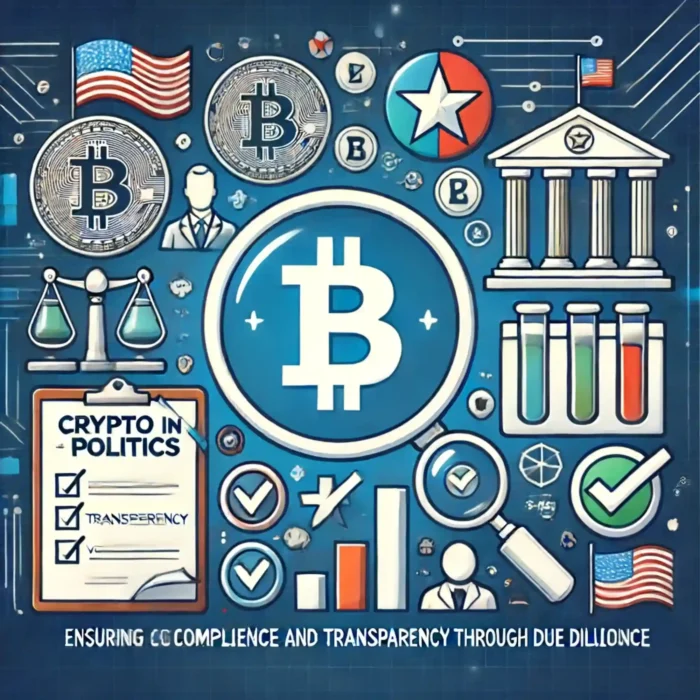
In the intriguing world of politics, where power-packed dialogues often echo in the chambers of decision-making, a silent revolution is taking shape. This revolution isn’t characterized by vibrant placards or incendiary speeches, but by complex algorithms and digital codes - welcome to the era of cryptocurrency. Just like the mighty river that cuts across mountains and plains to find its course, crypto too is infiltrating the hallowed corridors of political finance. Our journey, “Crypto in Politics: Ensuring Compliance and Transparency Through Due Diligence”, aims to explore this uncharted territory. This expedition will reveal how the cloak-and-dagger world of political finance is being challenged by this digital intruder, promising unprecedented transparency and demanding due diligence. So, fasten your seatbelts and get ready for a rollercoaster ride into the cryptic world of cryptocurrency in politics.
Unveiling the Intersection of Cryptocurrency and Politics
The advent of cryptocurrencies has added a new dimension to the political sphere, introducing a plethora of opportunities as well as challenges. Blockchain, the technology underpinning cryptocurrencies like Bitcoin and Ethereum, offers a level of transparency that is uncharacteristic of traditional political funding. However, this nascent field also presents potential loopholes that could be exploited without proper regulation and due diligence.
As cryptocurrencies continue to seep into the political landscape, the need for comprehensive regulatory frameworks and due diligence mechanisms has become paramount. Political entities venturing into this domain must ensure they are equipped with the necessary resources and expertise to handle cryptocurrency contributions. This includes understanding and abiding by the existing laws, tracking and reporting transactions, and performing requisite Know Your Customer (KYC) and Anti-Money Laundering (AML) checks.
| Benefits | Challenges |
| Transparency and traceability | Regulatory compliance |
| Potential for global outreach | Handling of cryptocurrency volatility |
| Reduced transaction costs | AML and KYC checks |
Regardless of the challenges, the intersection of cryptocurrency and politics is set to revolutionize political finance, ushering in a new age of transparency and global participation. Therefore, it is crucial for governments and political entities to embrace this change while ensuring compliance and carrying out due diligence to maintain the integrity of the political process.
- Transparency: With blockchain, every transaction is recorded on a public ledger which can be audited, making political funding more transparent.
- Accessibility: Cryptocurrencies can provide an avenue for people around the globe to contribute towards political causes they feel strongly about, regardless of geographical boundaries.
- Efficiency: Cryptocurrency transactions can potentially streamline campaign financing by reducing transaction costs and speeding up cross-border transfers.
The Role of Due Diligence in Crypto-Political Compliance
In the dynamic world of cryptocurrencies and blockchain technology, due diligence has become a crucial factor. It plays a pivotal role in ensuring transparency, mitigating risks, and maintaining political compliance. With the increased use of digital assets in the political landscape, whether it’s for campaign contributions or funding political activities, it’s imperative to establish a system of checks and balances.
Due diligence in the crypto-political realm primarily involves two key areas. First, source of funds - verifying the legitimacy of the cryptocurrency contributions to avoid the risk of money laundering or funding from illicit activities. Second, use of funds – monitoring how the funds are being used to ensure they align with legal regulations and ethical standards related to political activities.
- Source of Funds: This entails scrutinizing the origin of the cryptocurrency. It involves verifying the identities of the contributors, tracing the transaction history, and ensuring the funds aren’t linked to illegal activities. This process helps to avert potential regulatory and reputational risks.
- Use of Funds: Overseeing the use of funds ensures that they’re used in compliance with legal and political regulations. It prevents misuse of funds, promotes transparency, and ensures accountability in political financial management.
In this context, adopting a robust due diligence process becomes instrumental in fostering trust and credibility. Not only does it align the use of cryptocurrencies with political compliance, but it also paves the way for a more transparent and accountable political process.
Furthermore, the application of blockchain technology, with its inherent feature of transparency, can provide an additional layer to due diligence. Smart contracts, for instance, can be programmed to automate compliance checks, ensuring that funds are used according to pre-set terms and conditions.
| Due Diligence Component | Role in Crypto-Political Compliance |
|---|---|
| Source of Funds | Ensures legitimacy of cryptocurrency contributions, mitigates regulatory and reputational risks. |
| Use of Funds | Promotes transparency and accountability, ensures adherence to legal and political regulations. |
| Blockchain Technology | Provides automated compliance checks through smart contracts, enhances transparency and trust. |
Due diligence plays a vital role in integrating cryptocurrency into politics. It operates as the backbone of transparency, accountability, and compliance, thereby ensuring a smooth adoption of this transformative technology in the political arena.
Breaking Down the Mechanisms of Transparency in Political Cryptocurrency
In the realm of political financing, traditional methods have always been fraught with opacity, leading to a lack of accountability and potential corruption. Cryptocurrency, with its inherent transparency, offers a novel approach to rectify these issues. However, the integration of this new technological tool into the political landscape necessitates careful due diligence to ensure compliance and transparency.
One of the unique features of cryptocurrency is the public ledger or blockchain. This feature provides an immutable, verifiable record of all transactions. In the context of political donations, this ensures that any contribution can be traced back to its source. This level of transparency serves as an effective deterrent for illegal activities such as money laundering or the funneling of funds from prohibited sources. However, it’s important to note that potential misuse can occur if anonymity or pseudonymity features are abused.
| Aspect | Benefit |
|---|---|
| Blockchain | Immutable, verifiable record of transactions |
| Transparency | Source of funds can be traced, deterring illegal activities |
| Anonymity/Pseudonymity | Can be misused, but also protects donors’ privacy |
With the advent of smart contracts, it is possible to automate compliance checks, thereby reducing human error. These contracts could be programmed to reject donations from non-compliant sources or ensure adherence to donation limits. Furthermore, the introduction of crypto in political financing could facilitate micro-donations — small donations that can be made more frequently. This could democratize political funding by allowing more individuals to contribute.
However, while crypto promises potential benefits, it is essential to approach its integration with due diligence. Cryptocurrencies are still relatively new and unregulated in many jurisdictions. Therefore, it is imperative to develop a comprehensive understanding of the related laws and regulations to ensure legal compliance. Furthermore, the volatile nature of cryptocurrencies makes it necessary to have mechanisms in place to manage potential financial risks.
Innovative Strategies for Ensuring Compliance in the Crypto Political Landscape
In the ever-evolving landscape of cryptocurrencies, the intersection with the political arena brings about unique compliance challenges. The anonymity, borderless transactions, and decentralized nature of cryptocurrencies make it a potential avenue for illicit political activities. However, innovative strategies are being employed to ensure compliance and increase transparency within this sphere.
Due Diligence is key to mitigating risks and ensuring compliance in the crypto-political landscape. Governments, institutions, and individual stakeholders must maintain rigorous standards to confirm the legitimacy of sources and destinations of crypto funds. This involves continuous monitoring, comprehensive investigations, and meticulous record-keeping of transactions.
- Regulatory Technology (RegTech): This involves the use of advanced technologies to enhance regulatory processes. It includes the use of AI, machine learning, and blockchain technology to facilitate efficient and reliable monitoring and reporting.
- Smart Contracts: These are self-executing contracts with the terms of agreement directly written into code. They not only automate transactions but also ensure the fulfillment of agreed terms before funds are released, reducing the chances of fraud.
- KYC/AML Compliance: Adherence to Know Your Customer (KYC) and Anti-Money Laundering (AML) regulations is paramount. Utilizing AI and machine learning can enable efficient and accurate identity verification processes to reduce the risk of money laundering or terrorist financing.
| Strategies | Benefits |
|---|---|
| Regulatory Technology (RegTech) | Enhances regulatory processes |
| Smart Contracts | Automates transactions, reduces fraud |
| KYC/AML Compliance | Reduces risk of money laundering, terrorist financing |
The crypto-political landscape, though complex and challenging, can be navigated with diligence and the right strategies. By leveraging technology and enforcing stringent regulatory standards, it is possible to ensure compliance and promote transparency in this dynamic field.
Powering Politics with Crypto: Recommendations for a Transparent Future
As cryptocurrencies become increasingly mainstream, their potential uses have expanded far beyond mere financial transactions. One area where this is particularly noticeable is in political fundraising. Cryptocurrencies, with their inherent transparency, offer a powerful tool to promote accountability and eliminate corruption. However, it is vital to exercise due diligence to ensure compliance with existing regulations.
Some recommendations for how to achieve this include:
- Establish clear guidelines: It’s crucial to have a clear set of rules for how to handle and account for cryptocurrency donations. This might involve setting up a designated wallet for political donations, or it might be requiring donors to provide certain information.
- Stay informed: Cryptocurrency regulations are still evolving. It’s important to stay up-to-date with the latest rules and regulations to ensure that your political fundraising remains compliant.
- Transparency is key: The blockchain technology that underpins cryptocurrencies allows for unparalleled transparency. Make use of this by making all transactions publicly visible to show donors exactly where their money is going.
Considering these recommendations, it is also crucial to familiarize with the specific laws pertaining to political donations in your country. For instance, in the United States, the Federal Election Commission has specific guidelines for accepting donations in Bitcoin.
| Country | Crypto Regulations |
|---|---|
| USA | Federal Election Commission regulates Bitcoin donations |
| Canada | Elections Canada treats Bitcoin as a non-monetary contribution |
| UK | Electoral commission classifies Bitcoin as ‘cash’ |
While cryptocurrencies have the potential to revolutionize political fundraising, they also present new challenges in terms of regulation and compliance. By exercising due diligence and adhering to the recommendations above, it is possible to navigate these challenges and leverage the power of crypto for a more transparent and accountable political landscape.
The Way Forward
In the grand theater of politics, where the whispers of power and intrigue often mask the rumblings of transparency and accountability, the advent of cryptocurrency has introduced a new act. The curtain has been lifted on a digital realm that marries politics with pioneering technology, fostering an atmosphere of compliance and transparency. But as with all new forms of progress, it will require the stern hand of due diligence to ensure that this remarkable innovation upholds the values it is designed to champion.
The world of politics and crypto isn’t a dystopian fantasy or an utopian dream; it’s an evolving reality where every step we take shapes the narrative. As we bid adieu, remember that the crypto-political sphere is not just about investing in a new currency—it’s about investing in a new paradigm of governance. It’s about ensuring that the age-old game of politics does not lose itself in the maze of technology, but rather, finds a clear path towards compliance, transparency and above all, justice.
So here’s to the strange, beautiful dance between politics and crypto; may it continue to keep us on our toes, pushing us to question, to learn, and to strive for a future where power is not just heard, but seen—and held accountable.